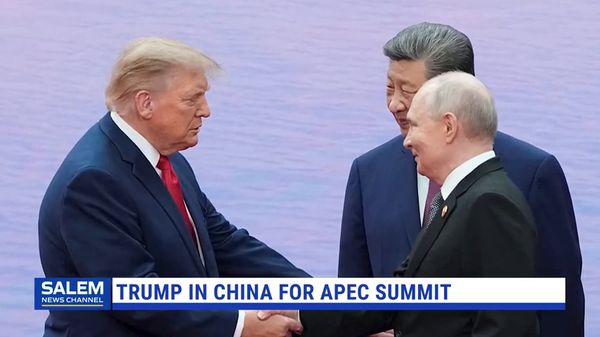


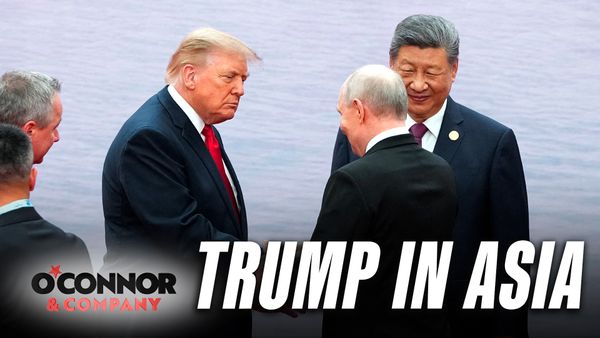

President Trump is set to meet with Chinese President Xi Jinping later tonight in China. No breakthroughs are expected at the meeting, though the two leaders are said to be stabilizing relationships between Beijing and Washington. Trump said he won't bring up the controversy surrounding Nvidia CEO Jensen Huang and his alleged relationship with a suspected Chinese spy.
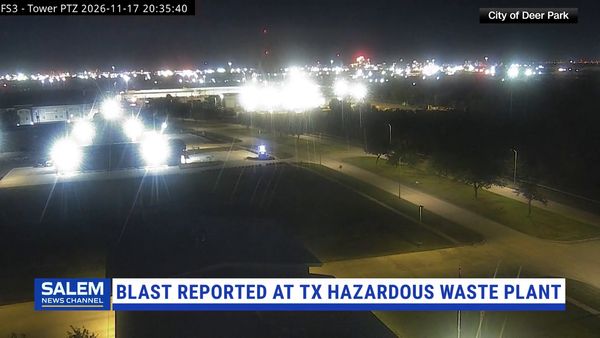
(Deer Park, TX) -- There's been a large explosion at a hazardous waste facility near Houston. The Harris County Fire Marshal's Office says one person was injured Tuesday night when a loud blast hit the Clean Harbors waste facility in Deer Park, creating flames and smoke that could be seen across the area. Officials say the fire has been put out and there's been no call for evacuations. The Clean Harbors facility handles hazardous and industrial waste.
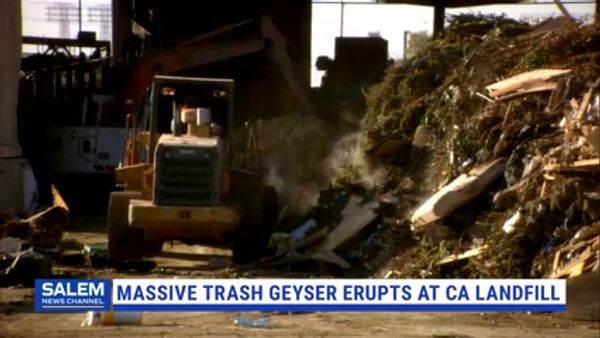
(Castaic, CA) -- A health order is in place in California after a massive trash geyser erupted at a landfill north of Los Angeles. The Los Angeles Department of Public Health says there was an explosion Monday afternoon at the Chiquita Canyon Landfill in Castaic [[ cas-TAY-ihk ]] that sent a geyser of decomposing trash hundreds of feet into the air. The L.A. County Fire Department says the explosion happened when a crew drilling a hole into a mound of trash hit a pressurized pocket of methane. The geyser has since been capped and the landfill operators ordered to pay for hotel stays and air purifiers for impacted residents.
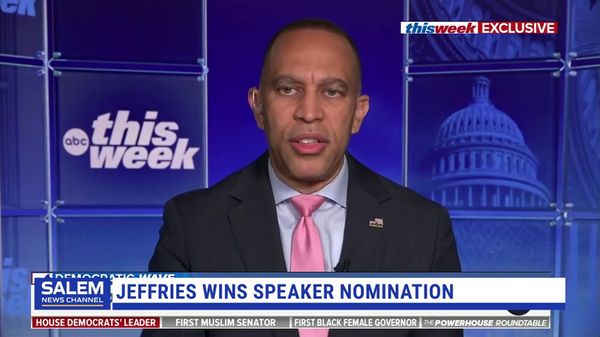
House Democrats have nominated New York Rep. Hakeem Jeffries for speaker, putting him on track to become the first Black speaker of the U.S. House of Representatives when the new Congress convenes in January.
Jeffries secured his party's nomination Wednesday, November 18, following a secret ballot vote among House Democrats. The decision comes roughly two weeks after Democrats secured a commanding majority in the 2026 midterm elections.
Despite his victory, Jeffries faced opposition from a small group of newly elected Democratic socialists who had refused to publicly commit to supporting him.
The lawmakers pushed for policy concessions, including votes on Medicare for All legislation and restrictions on U.S. arms sales to Israel.
However, the opposition was not enough to derail Jeffries' nomination, with Democrats holding their largest House majority in years.
Ahead of Wednesday's vote, Jeffries met privately with incoming lawmakers who had expressed reservations about his leadership. He also held discussions with several major Democratic factions, including the New Democrat Coalition, Blue Dog Coalition and Congressional Progressive Caucus.
The negotiations came as Jeffries signaled greater support for several progressive healthcare priorities.
On Friday, he announced support for lowering the Medicare eligibility age, establishing universal healthcare coverage for children and expanding Medicare benefits to include dental, vision and hearing services.
Those proposals reflect elements of a phased approach to universal healthcare supported by Vermont Sen. Bernie Sanders, although some moderate Democrats continue to favor a public insurance option instead.
Jeffries' nomination does not officially make him speaker. He must still win a vote of the full House on January 3, when the new Congress begins.
With Democrats holding a substantial majority, Jeffries is widely expected to secure the position.
If elected, he would make history as the first Black speaker of the House, taking control of the chamber as Democrats prepare to advance their legislative agenda under President Donald Trump's administration.
President Trump’s promise to end “catch and release” policies at the border reached a milestone in October, as federal officials reported that no immigrant apprehended at the border was released into the United States for the 18th month in a row and a separate forecast projected the U.S. murder rate would reach a record low in 2026.
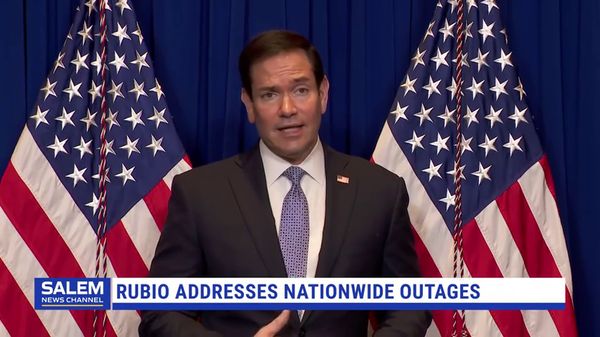
Secretary of State Marco Rubio is addressing concerns about a recent wave of major technical outages across the United States, including questions about whether the disruptions affecting government systems, airlines and major companies could be connected.
Speaking to reporters in the Philippines, Rubio discussed the incidents as federal officials and private companies work to determine what caused the separate disruptions.
The outages have raised questions about the reliability of critical infrastructure and whether the incidents could be linked to a broader cybersecurity threat.
Among the recent disruptions was a major Federal Aviation Administration outage Friday that prompted a nationwide ground stop, causing thousands of flight delays and cancellations.
United Airlines also experienced a separate system outage earlier this week, disrupting operations before the airline restored service. The company said there was no indication that its technical problems were caused by a cyberattack.
Meanwhile, CNN reported that the National Security Agency experienced an outage involving NSA Net, its classified internal communications network. The disruption reportedly prompted the agency to stagger employee arrival times while officials investigated the problem.
Other technical incidents have affected major websites and online services, adding to concerns about the stability of systems used by businesses and government agencies.
Despite the timing of the outages, officials have not publicly established a connection between the incidents or confirmed that they were part of a coordinated cyberattack.
The disruptions have also drawn attention from lawmakers, particularly following the FAA outage and Transportation Secretary Sean Duffy's request for $50 billion to modernize the nation's air traffic control infrastructure.
Rubio's comments come as questions continue about whether the recent technical failures reflect isolated problems or broader vulnerabilities in the country's infrastructure.
Investigations into the individual outages remain ongoing, and no evidence has been publicly presented establishing that the incidents share a common cause.
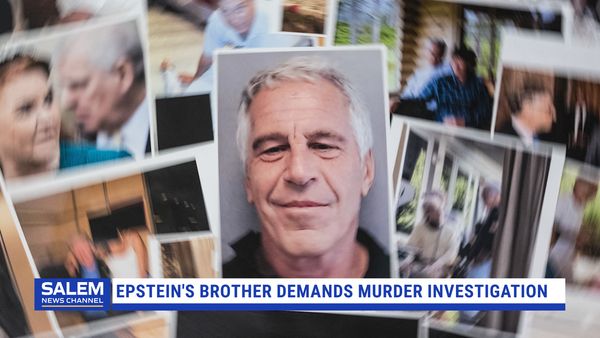
Jeffrey Epstein's brother is calling for a full-scale murder investigation into the disgraced financier's death after a team of forensic experts presented findings challenging the official ruling that he died by suicide.
Mark Epstein is demanding that authorities reopen the investigation, arguing that new forensic evidence raises serious questions about the circumstances surrounding his brother's death.
Jeffrey Epstein was found dead in his cell at the Metropolitan Correctional Center in Manhattan on August 10, 2019, while awaiting trial on federal sex trafficking charges.
His death was officially ruled a suicide by hanging by the New York City Office of Chief Medical Examiner.
However, a team of forensic experts recently presented findings suggesting that Epstein's injuries may be more consistent with homicidal strangulation than suicide.
The experts pointed to injuries documented during Epstein's autopsy, including fractures in his neck, as grounds for further investigation.
The findings have renewed debate over the circumstances of his death, which has been the subject of public scrutiny for more than seven years.
Mark Epstein has repeatedly questioned the official explanation and maintains that authorities have not adequately addressed concerns surrounding the case.
Despite the latest findings, the New York City Office of Chief Medical Examiner says it stands by its original determination that Epstein died by suicide.
Previous federal investigations have also concluded that Epstein died by suicide, while identifying significant failures in jail supervision and security procedures.
The new forensic findings have not overturned the official ruling, and authorities have not announced plans to reopen the case as a homicide investigation.
Mark Epstein is now calling for a comprehensive review of the evidence and
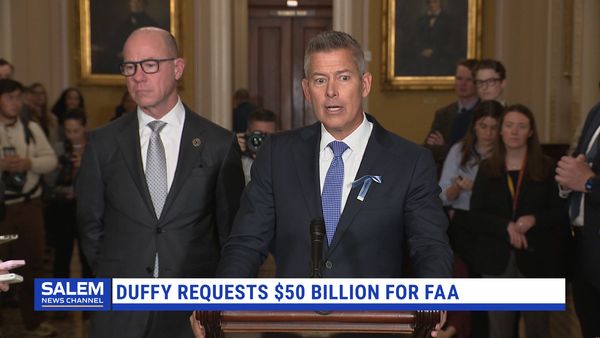
Transportation Secretary Sean Duffy is asking Congress for $50 billion to modernize the nation's aging air traffic control system following a major Federal Aviation Administration outage that disrupted thousands of flights across the country.
The funding request comes after Friday's widespread technical failure, which prompted the FAA to issue a nationwide ground stop and left airlines dealing with significant delays and cancellations.
Duffy says the additional funding would help replace outdated equipment, construct new air traffic control towers and improve airport infrastructure to prevent similar disruptions in the future.
The proposed investment would also support upgrades to communications, radar and other critical technology used by air traffic controllers to safely manage aircraft throughout U.S. airspace.
The latest outage has renewed concerns about the reliability of the nation's aviation infrastructure, which has faced longstanding challenges involving aging technology, equipment failures and staffing shortages.
However, the $50 billion request is drawing questions from some Republican lawmakers, who point to approximately $12 billion in funding approved last year for air traffic control improvements.
Critics argue that the Transportation Department should account for how the previously approved money is being used before Congress commits additional taxpayer dollars.
The administration maintains that modernizing the system is necessary to improve aviation safety, reduce delays and prevent widespread disruptions caused by technical failures.
Congress will now have to determine whether to approve the additional funding as lawmakers examine the FAA's infrastructure needs and the status of previously authorized modernization projects.
The proposal comes as federal officials continue reviewing the circumstances surrounding Friday's outage and its impact on airlines and passengers nationwide.
Steve Yates, a foreign policy expert, discusses the recent tech disruptions and their implications amidst the backdrop of a perceived cold war with China. Yates emphasizes the need for the U.S. to strengthen its infrastructure and technology sectors, highlighting the importance of responding to global challenges with resilience and innovation. The discussion also covers President Trump's Asia trip, focusing on the geopolitical dynamics with China and Russia, and the implications of the U.S. maintaining its superpower status. Additionally, Yates addresses the significance of the recent Nvidia incident and the urgent need for closing loopholes in export controls to prevent technological espionage. Throughout the conversation, Yates offers thoughtful insights and recommendations for navigating the complex international landscape while safeguarding American interests.
Blaise Ingoglia discusses Florida's recent elections and the state's political landscape with an emphasis on the importance of national politics on local races. Ingoglia highlights the challenges faced by Republicans in the state and the need for the party to better connect with local issues and concerns. He talks about the frustration over hyperinflation and economic struggles, attributing these issues partly to the previous administration's policies. Ingoglia also addresses the importance of creating economic prosperity and better jobs to make life more affordable for young people in Florida. Furthermore, he discusses the significance of Florida Amendment Three in curbing local government overspending and the need for more transparency in how public funds are managed. Ingoglia concludes by expressing optimism about the incoming governor and the potential for positive changes in the state.
In this episode of O'Connor in Company, Carl Jackson interviews nationally syndicated columnist Cal Thomas about the recent elections, the lame duck session, and President Trump's upcoming meetings with Xi Jinping and Putin. Cal discusses the contentious nature of the recent elections, labeling them as "dirty tricks elections" and expressing concerns over voter confusion tactics. He emphasizes the importance of the lame duck session for Republicans to push for judicial nominations and budget reconciliation while countering Democratic initiatives like Medicaid for all and open borders. Cal also shares his thoughts on the anticipated meetings between President Trump and the leaders of China and Russia, warning of potential exploitation of perceived presidential weakness. Lastly, he addresses growing concerns over recent outages and cyber threats, urging vigilance and preparedness against future attacks.
Michael Schlep, a young advocate in the online gaming community, shares his journey and fight for safety on Roblox in an interview. Schlep, who began playing Roblox at the age of eight, recounts how the platform became an escape for him, but also exposed him to graphic and horrific content from a game developer. After experiencing severe consequences, including a suicide attempt, he turned his focus toward advocating for safer gaming environments. Schlep highlights the systemic issues within Roblox, including inadequate moderation and misleading safety claims. Despite facing legal action from Roblox, Schlep's investigations led to the arrest of six child predators. He emphasizes the importance of parental vigilance and the need for better in-house moderation in the United States. Schlep's ultimate goal is to make Roblox a safer platform for children, advocating for transparency and accountability within the gaming community.
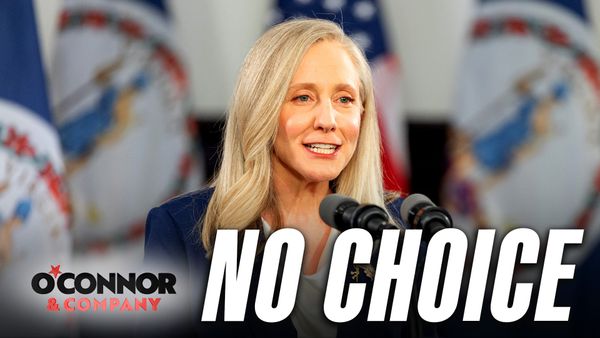
Virginia Governor Abigail Spanberger has announced that the state will not participate in a new federal school choice scholarship program, despite nearly 1.4 million eligible children. The program allows taxpayers to donate to scholarship-granting organizations that provide scholarships to students in need, including those attending public schools. Former Governor Youngkin advocated for Virginia's participation, but teachers' unions reportedly found a loophole allowing Spanberger to refuse involvement. Critics argue this decision denies underprivileged children opportunities for better education, potentially affecting future affordability and mobility for families. With the program set to launch in January, awareness and advocacy are growing, emphasizing the importance of education freedom and choice.
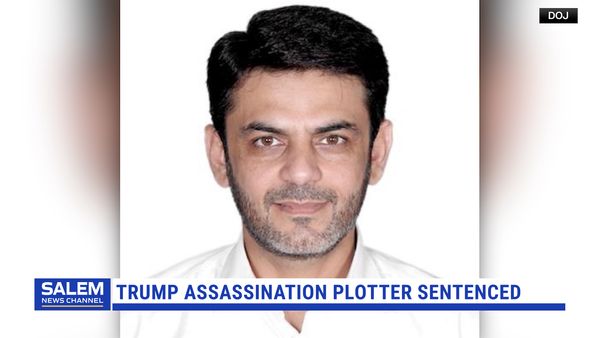
A Pakistani man convicted of plotting to assassinate President Donald Trump and other prominent U.S. political figures has been sentenced to 27 and a half years in federal prison.
Asif Merchant, 48, was sentenced Tuesday by U.S. District Judge Eric Komitee in Brooklyn, New York, after being found guilty in March of murder-for-hire and attempting to commit an act of terrorism across national boundaries.
Federal prosecutors say Merchant was working on behalf of Iran's Islamic Revolutionary Guard Corps when he traveled to the United States in 2024 to recruit individuals to carry out political assassinations.
According to the Justice Department, Merchant believed Trump was the primary target, although then-President Joe Biden and former United Nations Ambassador Nikki Haley were also discussed as possible targets.
Prosecutors say the assassination plot was intended to avenge the death of Iranian military commander Qasem Soleimani, who was killed in a U.S. drone strike ordered by Trump in January 2020.
Merchant arrived in the United States in April 2024 and contacted an acquaintance to help organize the operation. However, that individual alerted the FBI and became a confidential informant.
Authorities say Merchant later met with individuals he believed were hired assassins, but who were actually undercover FBI agents. He provided a $5,000 initial payment as part of the alleged assassination arrangement.
Federal agents arrested Merchant in Texas in July 2024, preventing the plot from moving forward.
During his trial, Merchant acknowledged his involvement with Iran's Revolutionary Guard but claimed he acted under pressure because he feared for the safety of his family in Tehran.
Prosecutors disputed that explanation, arguing that Merchant willingly participated in the operation.
At sentencing, Judge Komitee described the planned assassination of American political leaders as an exceptionally serious crime.
Attorney General Todd Blanche praised the conviction and sentence, emphasizing that the Justice Department would continue pursuing individuals involved in foreign-backed threats against U.S. officials.
Iran has denied allegations that it planned to assassinate Trump or other American officials.
Merchant's attorneys have indicated they intend to appeal the conviction.
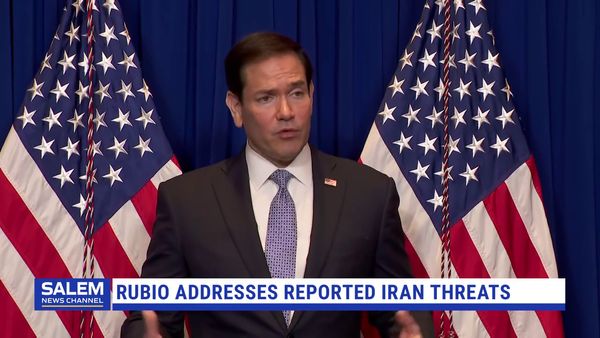
Secretary of State Marco Rubio is addressing reports of a possible Iranian attack targeting senior U.S. government officials, expressing confidence in American intelligence agencies while emphasizing that he does not believe there is an imminent threat.
Speaking in the Philippines, Rubio responded to concerns surrounding reports that Iran may be considering an attack involving a radioactive device, commonly referred to as a dirty bomb.
Rubio said he trusts the intelligence community's ability to monitor potential threats and provide accurate assessments to the administration.
The reports have raised concerns about the possibility of an attack targeting officials in Washington, D.C., although no imminent threat has been identified.
A dirty bomb combines conventional explosives with radioactive material. Unlike a nuclear weapon, it does not produce a nuclear explosion, but it can spread radioactive contamination and cause widespread disruption.
The reported threat comes amid heightened tensions between Washington and Tehran, including ongoing concerns about Iran's military activities and alleged threats against American officials.
Iran has denied allegations that it is planning attacks against U.S. officials.
President Donald Trump has also addressed the reports, saying his administration takes potential threats from Iran seriously.
Rubio's comments underscore the administration's position that intelligence agencies are closely monitoring the situation while officials seek to reassure Americans that there is no indication of an immediate attack.
Federal authorities have not publicly confirmed a specific operational plot or announced any arrests connected to the reported dirty bomb threat.
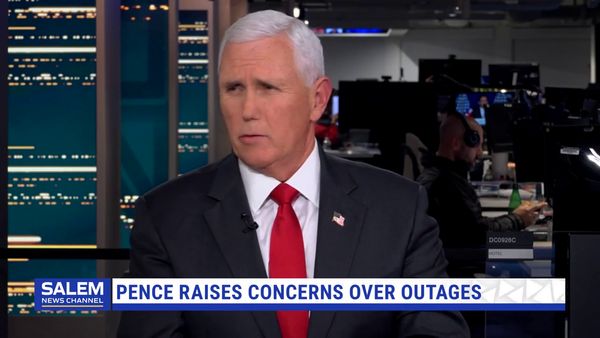
Former Vice President Mike Pence is raising concerns about a series of major technical outages affecting businesses and critical government systems across the United States.
Pence weighed in on the disruptions as questions continue to mount about the reliability and security of the nation's technology infrastructure.
The recent wave of incidents includes a nationwide Federal Aviation Administration ground stop Friday that disrupted air travel across the country, followed by additional technical problems affecting airlines, financial institutions and major online platforms.
Among the latest reported disruptions is an outage involving NSA Net, the National Security Agency's highly classified internal communications network.
According to CNN, the network, which allows NSA employees to exchange classified information, experienced an outage that prompted the agency to implement staggered arrival times for personnel.
Sources familiar with the situation said there was no evidence of a cyberattack at the time of the initial report.
United Airlines also reported a system outage earlier this week, although the airline said there was no indication its disruption was connected to a cybersecurity incident.
The incidents have raised questions about whether the outages are isolated technical failures or reflect broader vulnerabilities in systems used by government agencies and major businesses.
However, authorities have not established a connection between the disruptions, and there is no confirmed evidence that they are part of a coordinated cyberattack.
Pence's remarks come as federal officials and private companies work to identify the causes of the individual outages and restore normal operations.
Investigations into several of the disruptions remain ongoing.
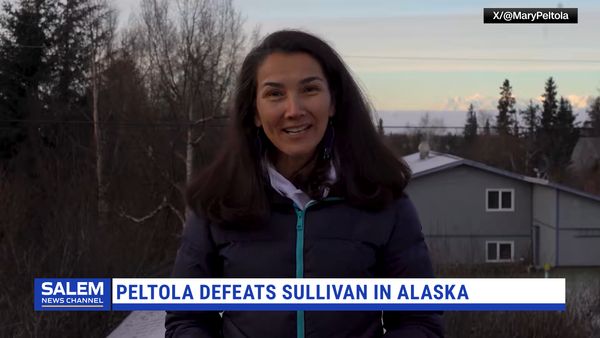
Democrat Mary Peltola has defeated incumbent Republican Sen. Dan Sullivan in Alaska's closely watched U.S. Senate race, marking another significant gain for Democrats in the 2026 midterm elections.
The Associated Press called the race Tuesday, November 17, after Peltola secured more than 50 percent of first-choice votes, eliminating the need for additional rounds of ranked-choice counting.
Peltola's victory marks the ninth Republican-held Senate seat flipped by Democrats this election cycle, giving the party a projected 56–44 majority in the incoming Senate.
The Alaska contest was the final U.S. Senate race to be called in the 2026 midterms.
The election also drew controversy over the presence of a second candidate named Dan Sullivan on the ballot. The unusual situation raised questions about potential voter confusion because the independent candidate shared the same name as the Republican incumbent.
However, Peltola's outright majority of first-choice votes meant that the ranked-choice voting system did not need to redistribute votes from eliminated candidates to determine the winner.
Under Alaska's ranked-choice voting system, voters can rank candidates in order of preference. If no candidate receives a majority of first-choice votes, the candidate with the fewest votes is eliminated, and those ballots are redistributed based on voters' next preferences. The process continues until a candidate receives a majority.
Peltola previously served in the U.S. House of Representatives, becoming the first Alaska Native elected to Congress in 2022. She lost her House reelection bid in 2024 before launching her campaign for the Senate.
Sullivan, a former Alaska attorney general and commissioner of the state's Department of Natural Resources, was first elected to the Senate in 2014 and won reelection in 2020.
Peltola's victory completes a major shift in the balance of power in Washington, with Democrats preparing to enter the next Congress holding a 12-seat advantage in the Senate.
The new Congress is scheduled to convene in January 2027.
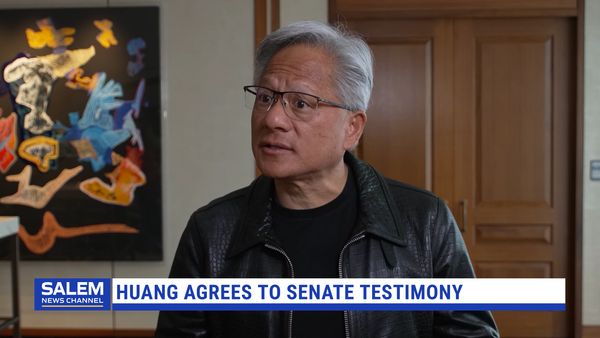
Former Nvidia CEO Jensen Huang has agreed to testify before the Senate Banking Committee as lawmakers investigate national security concerns involving the technology giant and its business dealings with China.
A spokesperson for Senate Banking Committee Chairman Tim Scott confirmed Tuesday that Huang had agreed to appear voluntarily before the panel. A date for the hearing has not yet been finalized.
The planned testimony follows allegations involving Huang and a reported relationship with Alice Huang, a former executive at Singapore-based computing company Megaspeed International. U.S. officials have raised concerns that Alice Huang may have ties to Chinese intelligence, although those allegations have not been conclusively established.
Lawmakers are examining whether the relationship may have exposed sensitive American technology or allowed Chinese companies to gain access to advanced artificial intelligence chips subject to U.S. export restrictions.
Megaspeed, a customer of Nvidia, has faced scrutiny over allegations that its computing equipment may have been diverted to Chinese companies. Megaspeed has denied wrongdoing and maintains that it complies with applicable export-control regulations.
Scott previously requested that Huang and Commerce Secretary Howard Lutnick testify before the Senate Banking Committee, warning that subpoenas could be issued if they declined to cooperate.
Huang has also agreed to participate in a closed-door interview with three House committees on December 1. Nvidia General Counsel Tim Teter is scheduled to appear before those committees the following day.
The congressional investigations come after Huang resigned as Nvidia's CEO last week following reports of extramarital relationships, including his alleged involvement with the former Megaspeed executive.
Huang said Tuesday that he would be willing to return to the company he co-founded, but Nvidia's board rejected the possibility of reinstating him as CEO.
Chief Financial Officer Colette Kress is serving as interim CEO while the company searches for a permanent replacement.
The Senate hearing is expected to focus on Nvidia's handling of sensitive technology, its compliance with U.S. export restrictions and potential national security risks involving China.
Salem Media, our partners, and affiliates use cookies and similar technologies to enhance your browsing experience, analyze site traffic, personalize site content, and deliver relevant video recommendations. By using this website and continuing to navigate, you consent to our use of such technologies and the sharing of video viewing activity with third-party partners in accordance with the Video Privacy Protection Act and other privacy laws.Privacy Policy